
Training Evaluation Model (TEM)   71-slide PPT PowerPoint presentation slide deck (PPTX)
$59.00

Training Evaluation Model (TEM) (71-slide PPT PowerPoint presentation slide deck (PPTX)) Preview Image
Log in to unlock full preview.
Training Evaluation Model (TEM) (71-slide PPT PowerPoint presentation slide deck (PPTX)) Preview Image
Arrow   Click main image to view in full screen.

Training Evaluation Model (TEM) (PowerPoint PPTX Slide Deck)

PowerPoint (PPTX) 71 Slides

$59.00
Developed by a Learning Experience Designer with a wealth of experience at industry giants like Microsoft and IBM, this presentation is your essential resource for mastering training evaluation and optimizing learning effectiveness.
Add to Cart


Immediate download
Fully editable PowerPoint
Free lifetime updates

BENEFITS OF THIS POWERPOINT DOCUMENT

  1. Understand why evaluation of training programs is critical to you and your organization.
  2. Understand the four levels of training evaluation.
  3. Learn how to use the guidelines to evaluate training programs.

EMPLOYEE TRAINING PPT DESCRIPTION

Training Evaluation Model (TEM) PPT by Allan Ung: Learn the 4-level framework to measure employee training effectiveness. Download this proven job training evaluation tool now. Training Evaluation Model (TEM) is a 71-slide PPT PowerPoint presentation slide deck (PPTX) available for immediate download upon purchase.

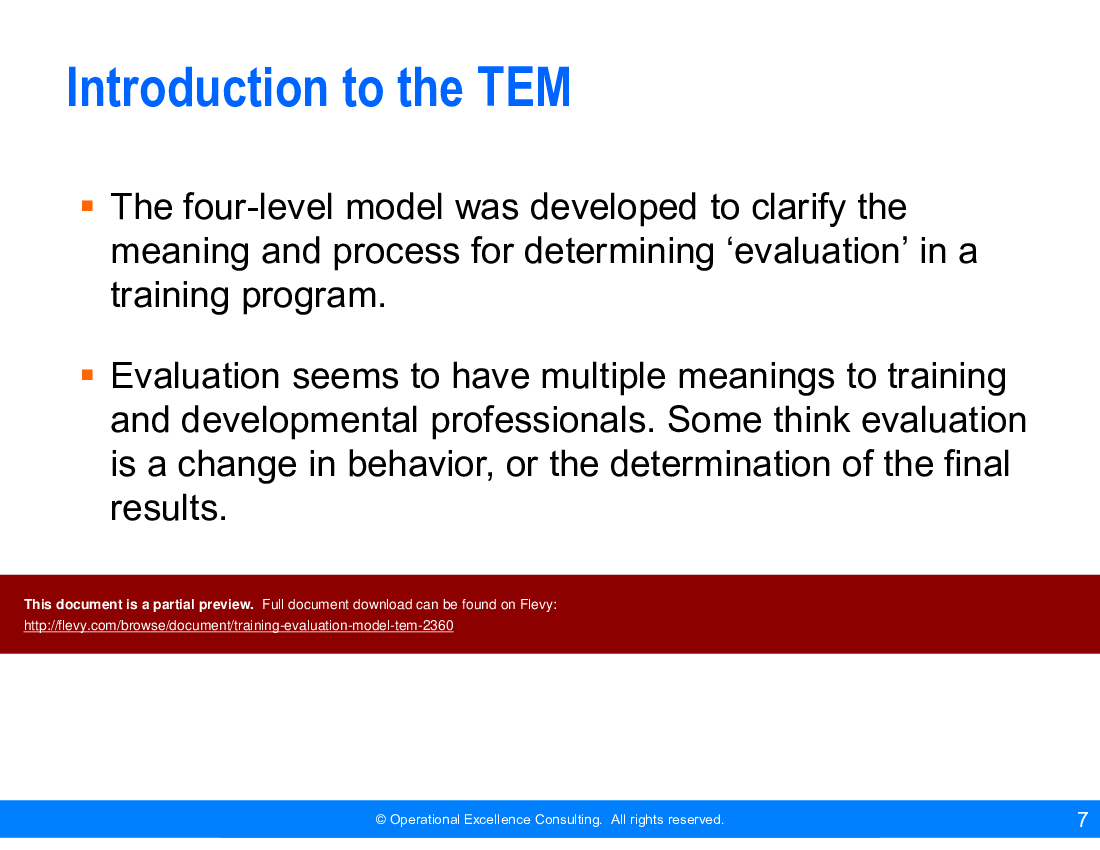
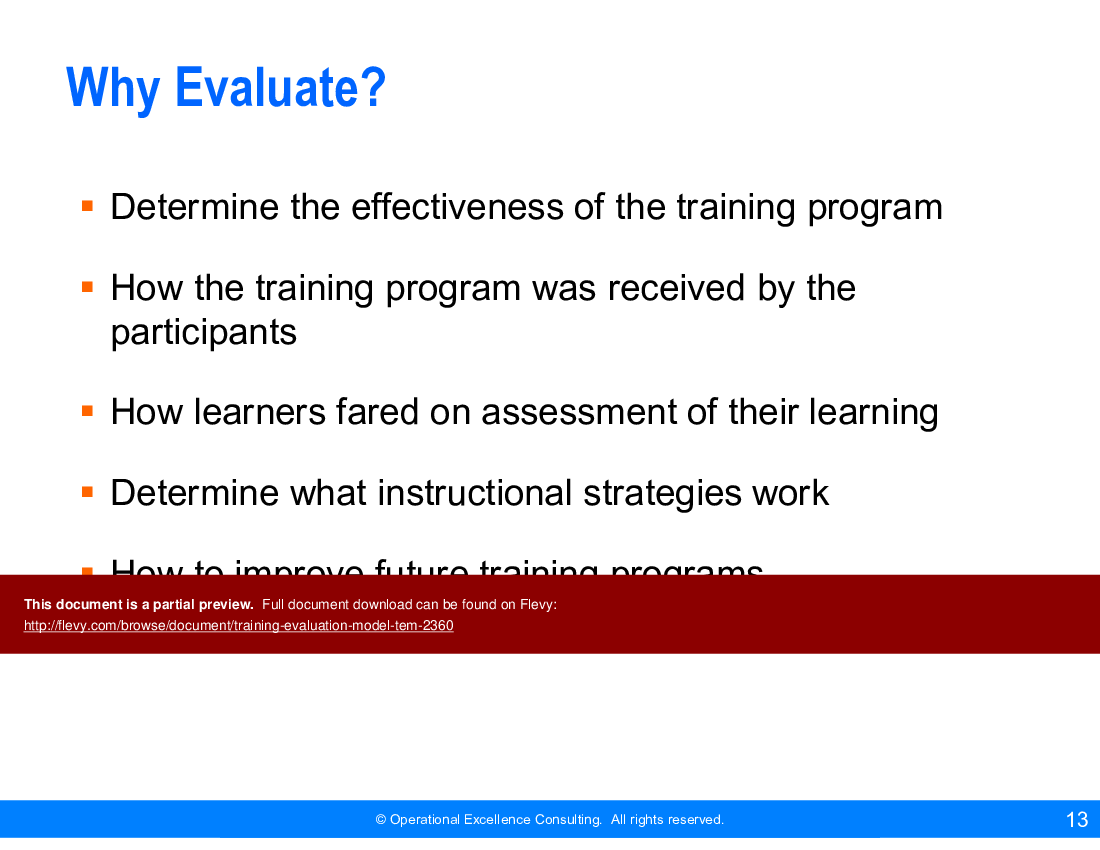
The four-level Training Evaluation Model (TEM) is the worldwide standard for evaluating the effectiveness of training. It considers the value of any type of training, formal or informal, across four levels. The model can be applied before, during and after training to both maximize and demonstrate the value of training to the organization.

Understanding and using the model is important not just to HRD professionals but also to managers and individuals who play a critical role in ensuring that training programs can be improved and applied to create positive impact to the organization.

LEARNING OBJECTIVES

1. State why evaluation of training programs is critical to you and your organization.
2. Apply the four levels of evaluation to your training programs.
3. Use guidelines for developing evaluations.
4. Implement various forms and approaches to evaluation.

CONTENTS

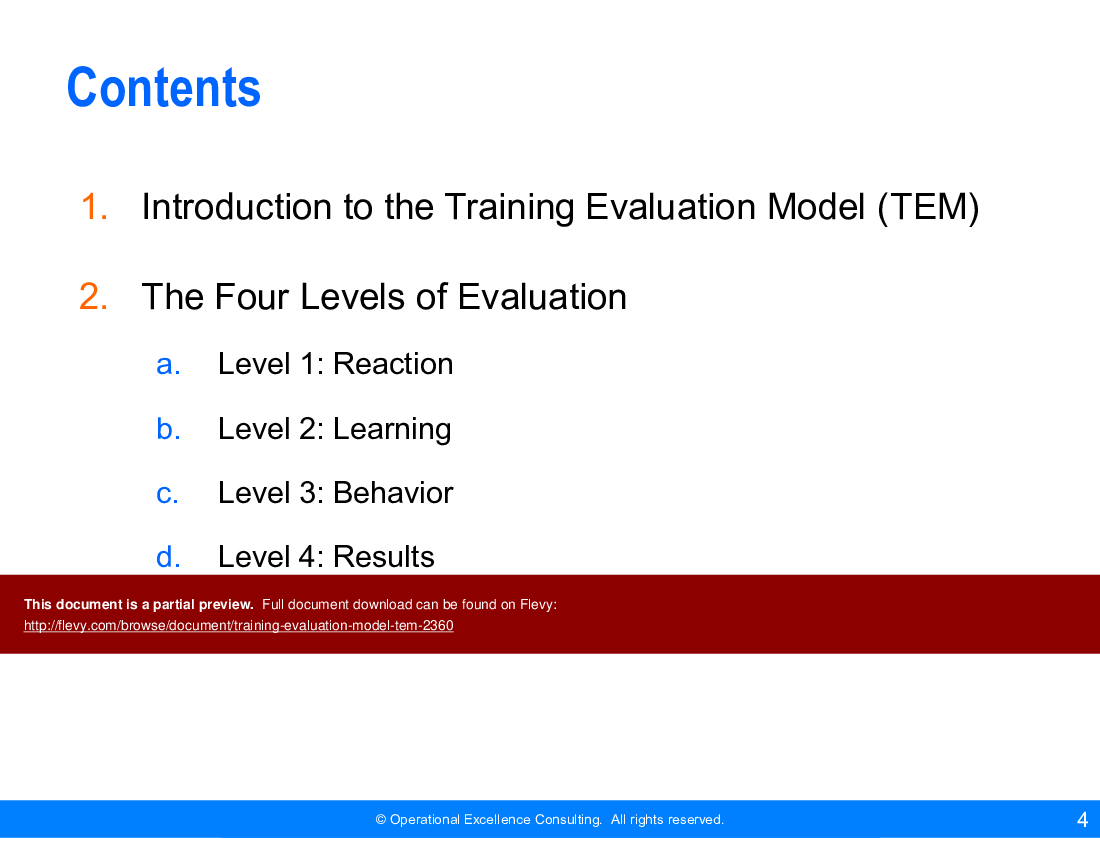
1. Introduction to the Training Evaluation Model (TEM)
•  Introduction to the TEM
•  Frequent Questions Asked by HRD Professionals on Training Performance
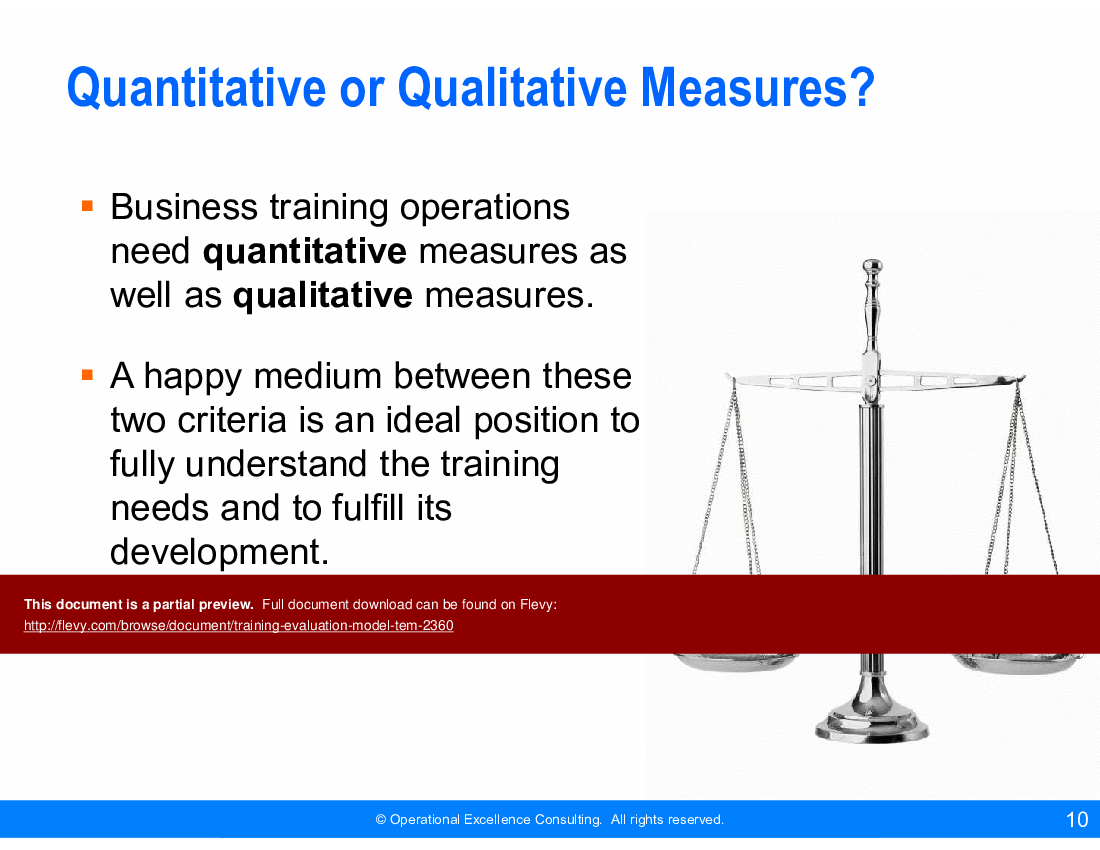
•  Quantitative or Qualitative Measures?
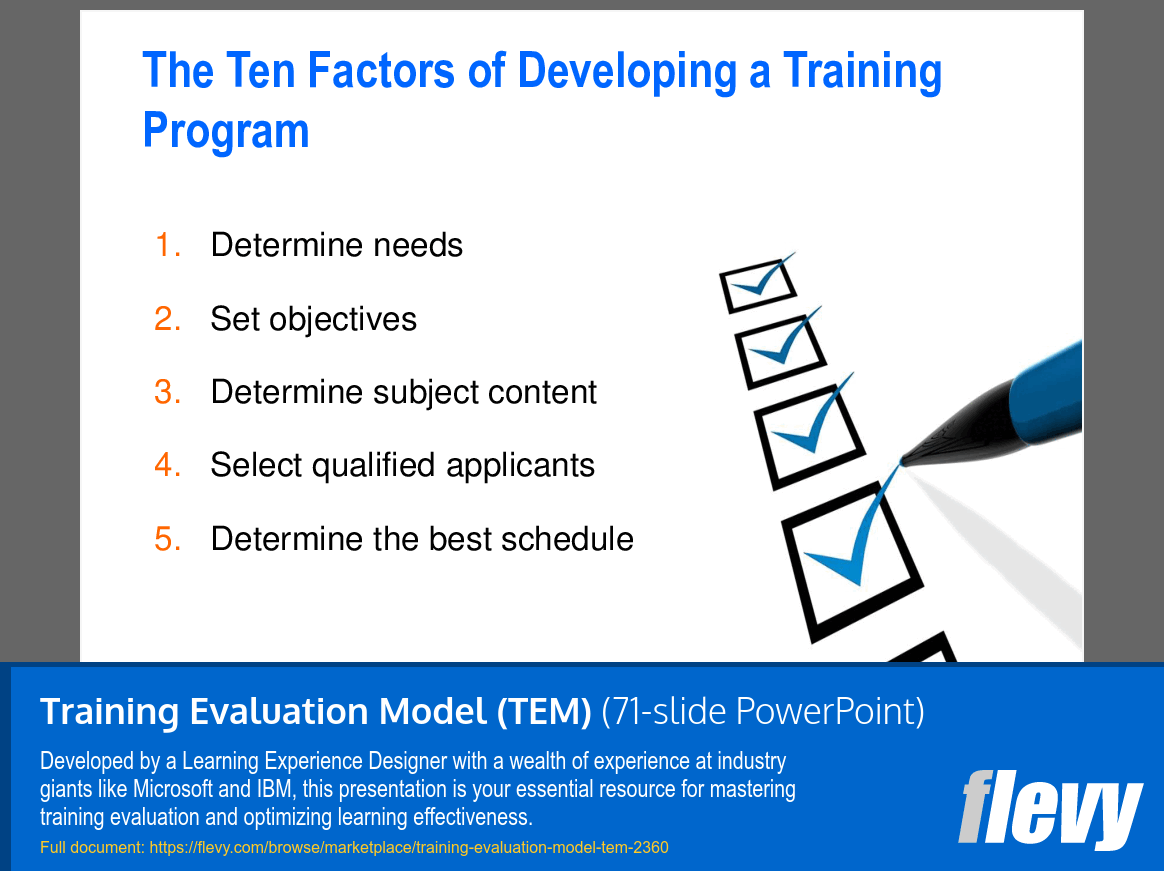
•  Ten Factors of Developing Training Programs
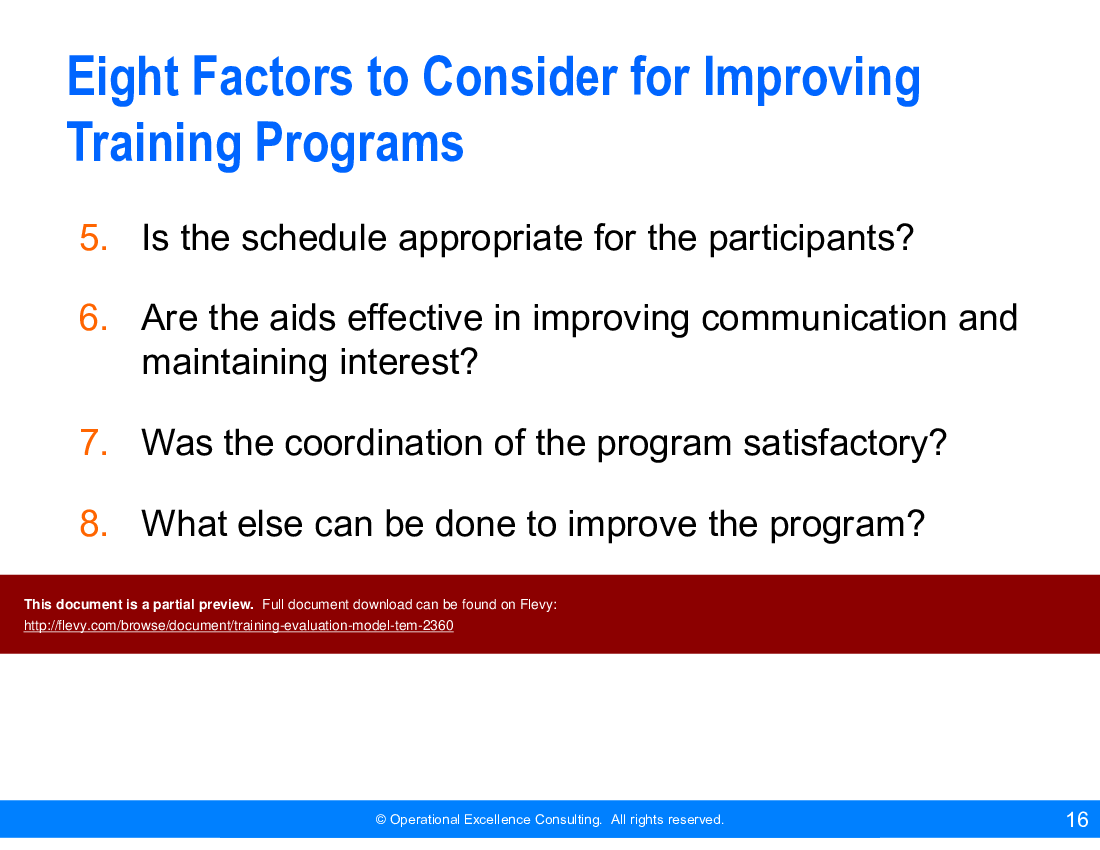
•  Eight Factors to Consider for Improving Training Programs
•  Reasons Why Many Companies Do Not Gather Feedback for Improving Training Programs
•  The Four-level Training Evaluation Model

2. The Four Levels of Training Evaluation
•  Level 1: Reaction
•  Level 2: Learning
•  Level 3: Behavior
•  Level 4: Results

The Training Evaluation Model (TEM) PPT equips organizations with a robust framework to measure training effectiveness across four critical levels: Reaction, Learning, Behavior, and Results. This comprehensive guide provides actionable insights and practical tools for HRD professionals and managers to enhance training programs. It emphasizes the importance of both quantitative and qualitative measures, ensuring a balanced approach to evaluation. The document also includes detailed guidelines for developing evaluations, implementing various evaluation forms, and understanding the impact of training on organizational performance. This resource is essential for those looking to maximize the ROI of their training initiatives.

Got a question about the product? Email us at support@flevy.com or ask the author directly by using the "Ask the Author a Question" form. If you cannot view the preview above this document description, go here to view the large preview instead.

MARCUS OVERVIEW

This synopsis was written by Marcus [?] based on the analysis of the full 71-slide presentation.


Executive Summary
The Training Evaluation Model (TEM) presentation is a vital resource for organizations aiming to assess the effectiveness of their training programs. Developed by Operational Excellence Consulting, this model provides a structured approach to evaluating training through 4 distinct levels: Reaction, Learning, Behavior, and Results. By applying the TEM framework, organizations can maximize the value of their training initiatives, ensuring alignment with business objectives and demonstrating tangible outcomes. This presentation equips corporate executives, HR leaders, and training professionals with the necessary tools to implement effective evaluation strategies.

Who This Is For and When to Use
•  Corporate executives seeking to enhance training effectiveness and ROI
•  HR leaders responsible for training program evaluation and improvement
•  Learning and Development (L&D) teams focused on maximizing training impact
•  Training facilitators aiming to implement structured evaluation methods

Best-fit moments to use this deck:
•  During the design phase of training programs to establish evaluation criteria
•  Following training sessions to assess participant feedback and learning outcomes
•  In strategic meetings to align training evaluation with organizational goals

Learning Objectives
•  State why evaluation of programs is critical to you and your organization
•  Apply the 4 levels of evaluation to your training programs
•  Use guidelines for developing evaluations
•  Implement various forms and approaches to evaluation

Table of Contents
•  Introduction to the Training Evaluation Model (TEM) (page 1)
•  The Four Levels of Evaluation (page 3)
•  Level 1: Reaction (page 4)
•  Level 2: Learning (page 6)
•  Level 3: Behavior (page 8)
•  Level 4: Results (page 10)

Primary Topics Covered
•  Introduction to TEM - The TEM is recognized globally as the standard for evaluating training effectiveness, applicable across various training types.
•  Level 1: Reaction - Measures how participants perceive the training, focusing on satisfaction and engagement.
•  Level 2: Learning - Assesses the extent to which participants acquire the intended knowledge and skills through pre- and post-testing.
•  Level 3: Behavior - Evaluates whether participants apply what they learned in their work environment.
•  Level 4: Results - Measures the impact of training on organizational performance and ROI.
•  Evaluation Guidelines - Provides practical steps for implementing each level of evaluation effectively.

Deliverables, Templates, and Tools
•  Evaluation forms for measuring participant reactions
•  Pre- and post-test templates for assessing learning outcomes
•  Observation checklists for evaluating behavior changes
•  ROI calculation frameworks for measuring training results
•  Feedback collection tools for continuous improvement

Slide Highlights
•  Overview of the Four-Level Training Evaluation Model, visually representing the evaluation process.
•  Detailed descriptions of each evaluation level, clarifying their significance and measurement methods.
•  Examples and guidelines for effective evaluation practices at each level.

Potential Workshop Agenda
Introduction to TEM (30 minutes)
•  Overview of the Training Evaluation Model and its importance
•  Discussion on the 4 levels of evaluation

Level 1: Reaction Workshop (45 minutes)
•  Techniques for gathering participant feedback
•  Designing effective reaction evaluation forms

Level 2: Learning Assessment (45 minutes)
•  Developing pre- and post-tests
•  Strategies for measuring knowledge and skill acquisition

Level 3: Behavior Evaluation (45 minutes)
•  Methods for observing and assessing behavior changes
•  Using surveys and interviews for feedback

Level 4: Results Measurement (30 minutes)
•  Calculating ROI and assessing organizational impact
•  Best practices for presenting evaluation findings

Customization Guidance
•  Tailor evaluation forms to align with specific training objectives and participant demographics.
•  Adapt the evaluation timeline to fit the training schedule and organizational needs.
•  Incorporate organizational terminology and metrics to enhance relevance and clarity.

Secondary Topics Covered
•  Importance of continuous feedback in training programs
•  Strategies for improving training effectiveness based on evaluation results
•  Common challenges in training evaluation and how to overcome themDocument FAQ
What is the purpose of the Training Evaluation Model (TEM)?
The TEM provides a structured framework for assessing training effectiveness across 4 levels, helping organizations maximize training value.

How can I implement the 4 levels of evaluation in my organization?
Start by defining clear objectives for each level, then develop appropriate evaluation tools and methods to measure outcomes effectively.

What types of data should I collect for Level 1 evaluations?
Focus on participant satisfaction, perceived relevance, and engagement through surveys and feedback forms.

How do I measure learning outcomes effectively?
Utilize pre- and post-tests to assess knowledge and skill acquisition, ensuring alignment with training objectives.

What methods can I use to evaluate behavior changes post-training?
Consider observations, performance reviews, and feedback from supervisors to assess the application of learned skills in the workplace.

How can I demonstrate the ROI of training programs?
Calculate the impact of training on key performance indicators such as productivity, quality, and employee retention to showcase ROI.

What challenges might I face in training evaluation?
Common challenges include lack of participant engagement, difficulty in measuring behavior changes, and resistance to feedback collection.

How often should evaluations be conducted?
Regular evaluations should occur immediately after training and periodically thereafter to assess long-term effectiveness.

Glossary
•  Training Evaluation Model (TEM) - A framework for assessing the effectiveness of training programs across 4 levels.
•  Level 1: Reaction - Measures participant satisfaction and engagement with the training.
•  Level 2: Learning - Assesses knowledge and skill acquisition through testing.
•  Level 3: Behavior - Evaluates the application of learned skills in the workplace.
•  Level 4: Results - Measures the impact of training on organizational performance and ROI.
•  ROI (Return on Investment) - A metric used to evaluate the financial return of training initiatives.
•  Feedback Forms - Tools used to collect participant reactions and suggestions for improvement.
•  Pre-Test/Post-Test - Assessments conducted before and after training to measure learning outcomes.
•  Observation Checklists - Tools for evaluating behavior changes in the workplace.
•  Continuous Improvement - Ongoing efforts to enhance training effectiveness based on evaluation results.
•  Performance Indicators - Metrics used to assess the success of training programs.
•  Qualitative Measures - Non-numeric data collected through feedback and observations.
•  Quantitative Measures - Numeric data collected through tests and assessments.
•  Control Group - A group used for comparison in evaluation studies to assess training impact.

Source: Best Practices in Employee Training PowerPoint Slides: Training Evaluation Model (TEM) PowerPoint (PPTX) Presentation Slide Deck, Operational Excellence Consulting


$59.00
Developed by a Learning Experience Designer with a wealth of experience at industry giants like Microsoft and IBM, this presentation is your essential resource for mastering training evaluation and optimizing learning effectiveness.
Add to Cart
  

ABOUT THE AUTHOR

Author image
Additional documents from author: 257
Terms of usage (for all documents from this author)

Operational Excellence Consulting, founded in 2009 by Allan Ung, draws from extensive experience at Microsoft, IBM, and Underwriters Laboratories (UL). We specialize in strategy deployment, customer experience design, and operational excellence, applying Design Thinking, Lean, and Systems Thinking to maximize customer value and minimize waste.

Our ... [read more]

Ask the Author a Question

You must be logged in to contact the author.

Click here to log in Click here register

Did you know?
The average daily rate of a McKinsey consultant is $6,625 (not including expenses). The average price of a Flevy document is $65.

Bundle and save! You can save up to % with bundles!

View bundle(s)


Trusted by over 10,000+ Client Organizations
Since 2012, we have provided business templates to over 10,000 businesses and organizations of all sizes, from startups and small businesses to the Fortune 100, in over 130 countries.
AT&T GE Cisco Intel IBM Coke Dell Toyota HP Nike Samsung Microsoft Astrazeneca JP Morgan KPMG Walgreens Walmart 3M Kaiser Oracle SAP Google E&Y Volvo Bosch Merck Fedex Shell Amgen Eli Lilly Roche AIG Abbott Amazon PwC T-Mobile Broadcom Bayer Pearson Titleist ConEd Pfizer NTT Data Schwab


Read Customer Testimonials

 
"Flevy.com has proven to be an invaluable resource library to our Independent Management Consultancy, supporting and enabling us to better serve our enterprise clients.

The value derived from our [FlevyPro] subscription in terms of the business it has helped to gain far exceeds the investment made, making a subscription a no-brainer for any growing consultancy – or in-house strategy team."

– Dean Carlton, Chief Transformation Officer, Global Village Transformations Pty Ltd.
 
"FlevyPro provides business frameworks from many of the global giants in management consulting that allow you to provide best in class solutions for your clients."

– David Harris, Managing Director at Futures Strategy
 
"As a consulting firm, we had been creating subject matter training materials for our people and found the excellent materials on Flevy, which saved us 100's of hours of re-creating what already exists on the Flevy materials we purchased."

– Michael Evans, Managing Director at Newport LLC
 
"One of the great discoveries that I have made for my business is the Flevy library of training materials.

As a Lean Transformation Expert, I am always making presentations to clients on a variety of topics: Training, Transformation, Total Productive Maintenance, Culture, Coaching, Tools, Leadership Behavior, etc. Flevy "

– Ed Kemmerling, Senior Lean Transformation Expert at PMG
 
"Flevy is our 'go to' resource for management material, at an affordable cost. The Flevy library is comprehensive and the content deep, and typically provides a great foundation for us to further develop and tailor our own service offer."

– Chris McCann, Founder at Resilient.World
 
"As a consultant requiring up to date and professional material that will be of value and use to my clients, I find Flevy a very reliable resource.

The variety and quality of material available through Flevy offers a very useful and commanding source for information. Using Flevy saves me time, enhances my expertise and ends up being a good decision."

– Dennis Gershowitz, Principal at DG Associates
 
"As an Independent Management Consultant, I find Flevy to add great value as a source of best practices, templates and information on new trends. Flevy has matured and the quality and quantity of the library is excellent. Lastly the price charged is reasonable, creating a win-win value for "

– Jim Schoen, Principal at FRC Group
 
"I like your product. I'm frequently designing PowerPoint presentations for my company and your product has given me so many great ideas on the use of charts, layouts, tools, and frameworks. I really think the templates are a valuable asset to the job."

– Roberto Fuentes Martinez, Senior Executive Director at Technology Transformation Advisory


Save with Bundles

This document is available as part of the following discounted bundle(s):

Save %!
Complete Instructional Design Toolkit

This bundle contains 3 total documents. See all the documents to the right.

$139.00


Add Bundle & Save


Customers Also Bought These Documents


Customers Also Like These Documents

Explore Related Management Topics


Your Recently Viewed Documents
Download our FREE Organization, Change, & Culture, Templates

Download our free compilation of 50+ slides and templates on Organizational Design, Change Management, and Corporate Culture. Methodologies include ADKAR, Burke-Litwin Change Model, McKinsey 7-S, Competing Values Framework, etc.